As part of our ongoing content collaboration with Workforce Singapore, Ethos BeathChapman continues to share market intelligence and hiring insights to support professionals and employers navigating Singapore’s evolving talent landscape.
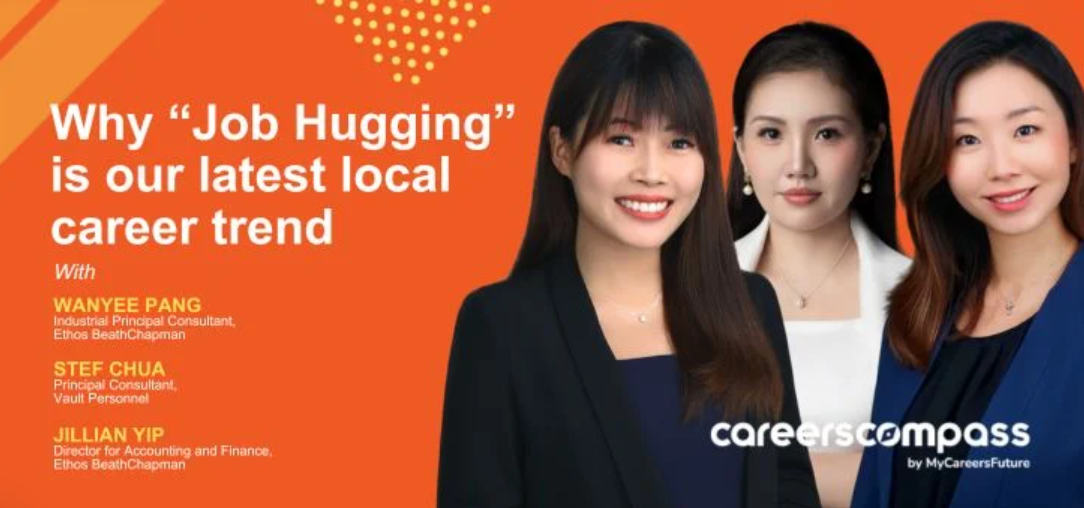
Instead of frequently switching roles, more professionals are opting to stay longer in their positions, a trend known as “job hugging.” Our experienced consultants, Wanyee Pang, Principal Consultant, Industrial, and Jillian Yip, Director, Accounting and Finance, recently shared their insights with
Workforce Singapore (WSG) on this evolving career behaviour and its implications for both employees and employers.
Career loyalty is making a quiet comeback in Singapore. While job hopping has long been seen as a way to accelerate growth, many workers are now recognising the benefits of committing to a single role or organisation for longer periods.
Defining the Trend: Why Employees Are Clinging to Their Jobs
“Job hugging” describes the tendency of employees to stay in their current roles, even when they feel unfulfilled. Often, this behaviour stems from a cautious outlook on the economy, concerns about potential layoffs, or simply staying in their comfort zone. While it may provide short-term security, it also raises questions about long-term career growth and personal fulfilment.
The Employer Perspective
SMEs and MNCs alike are noticing the effects of job hugging. Wanyee Pang said, “Over the past few years, uncertainty in the market has made employees far more cautious about changing jobs. Many fear the “last-in, first-out” risk if downsizing occurs. For those with families or significant financial commitments, stability tends to outweigh the desire for change. Employees who already enjoy hybrid or flexible work arrangements are less inclined to take the risk of moving, especially when it’s unclear if a new employer can offer the same balance. Increasingly, these non-monetary factors have become just as important as pay or title.”
Companies are adopting retention strategies, including job redesign, performance frameworks, and talent assessments to ensure cultural fit. Meanwhile, some are investing in AI technology and outsourcing certain roles to maintain productivity and compliance.
Benefits and Risks for Employees
Jillian Yip highlights “Employees who choose to “wait it out” in their current firm may stand to gain, especially if they are staying for the right reasons and in a supportive environment. On the flip side, “job hugging” can be counterproductive when employees choose to stay in their current role for one sole reason — comfort and stability, even at the risk of stagnation.”
Staying longer in a role can be advantageous if employees continue to grow, gain new responsibilities, or deepen expertise. Conversely, remaining in a position purely for comfort may lead to stagnation, skill atrophy, or reduced marketability. Making deliberate choices about career moves ensures that stability does not come at the expense of long-term prospects.
Advice for Job Huggers
Employees should evaluate whether their current role aligns with their mid- to long-term career goals. Jillian Yip advises, “My advice would be to have clarity on your mid- to long-term career aspirations. If staying in your current role does not hinder your overall career trajectory or the direction you aim to move toward, then there is no harm in staying. This is especially if it offers you growth in other forms, such as broader exposure, deeper expertise, or leadership opportunities.”
This article includes insights from Wanyee Pang, Jillian Yip, and Stef Chua, contributed in collaboration with Workforce Singapore. Read the full original article here.