

June 15, 2026
Quality, Architecture & the Human Element | Executive Lens Episode 2
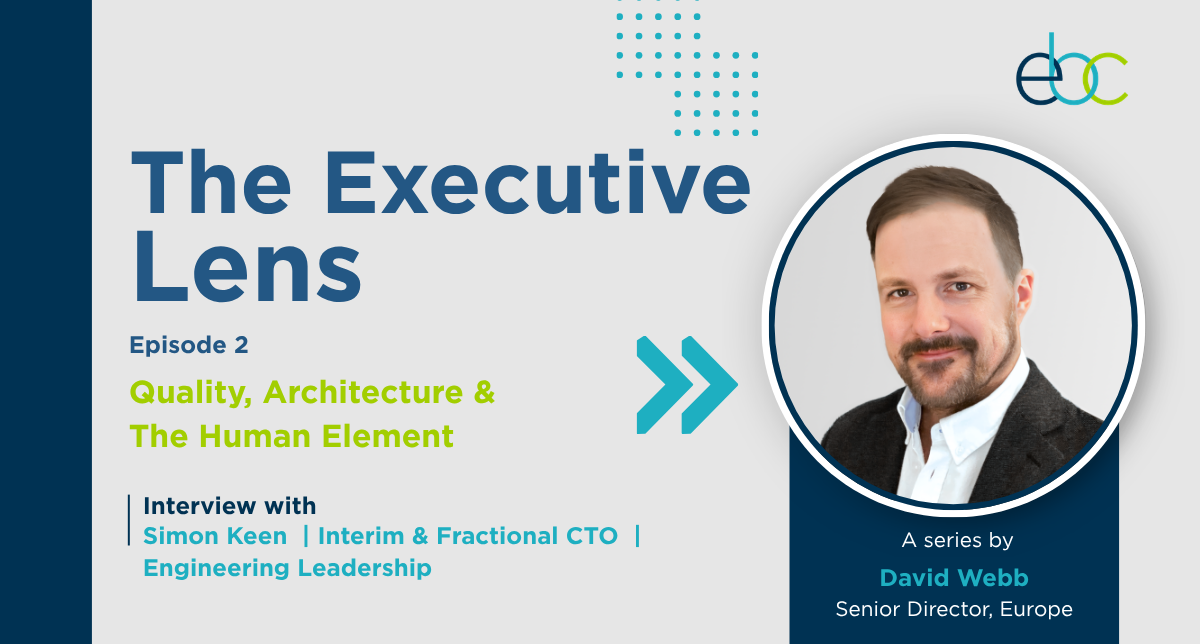
In fast-moving tech environments, it’s easy for leaders to chase speed, innovation, and AI hype. But according to an expert in the field, Simon Keen, the real differentiator isn’t velocity; it’s quality, architecture, and people.
Simon breaks down the critical gaps he sees inside engineering organisations and the human skills that define great technical leadership.
The CTO as Translator, the Most Underrated Role in Tech
As an interim CTO, Simon often steps into chaotic environments: unclear roadmaps, rushed builds, and teams under pressure. His job? Translate technical reality into business language.
From timelines to budgets to feasibility, the CTO must explain “why things work the way they do” to non-technical stakeholders and protect teams from unrealistic expectations.
It’s not just engineering leadership. It’s communication, negotiation, and problem-solving at scale.
The Quality Crisis: When Software Becomes Invisible, Standards Drop
One of Simon’s biggest concerns is the industry-wide decline in quality. Software is intangible, executives can’t “see” engineering progress like bricks on a building and that leads to:
- Unrealistic deadlines
- Cutting corners
- Over-prioritising speed
- Falling for hype cycles (especially AI)
When quality slips, consequences become severe, from business outages to real-world harm.
Architecture & Planning: The Real Hard Work (Not the Coding)
For Simon, the single most important success factor is product management, knowing exactly what you’re building and why before writing a line of code. Key principles he believes every organisation must get right:
- Architect for 3–5 years ahead
- Avoid short-termism — “rush jobs” destroy structure
- Treat software like building a housing estate, not a shed
- Prioritise continuous improvement
- Remember: coding is the easy part — design is the real challenge
His approach works, Simon once delivered a major network management system 10% under cost with only two minor bugs in 18 months. Quality isn’t slow, bad planning is.
The Human Element: Know Yourself to Lead Well
Simon credits his dyslexia as his “secret weapon” giving him strong conceptual thinking and an extraordinary memory for past projects. But his broader message is universal: Great tech leaders know themselves.
They understand their strengths, weaknesses, motivations, and limits. They stay curious, ask “why,” and constantly challenge assumptions.
In an industry that moves fast, the ability to learn about technology and about yourself becomes a strategic advantage.
What This Means for Hiring
Organisations chasing AI maturity or engineering excellence often overlook the fundamentals that Simon champions:
- Strong product management
- Clear technical communication
- High-quality architecture
- Leaders who can translate between tech and business
- Teams who value continuous improvement
- Individuals with curiosity and self-awareness
These aren’t easy skills to find, and the gap is widening.
We work closely with founders, CTOs, and tech leaders to identify engineering and product talent who can deliver not just speed, but scalability, quality, and long-term value.