May 21, 2026

From Scorekeeper to Architect: EBC at the CFO Leadership Forum 2026

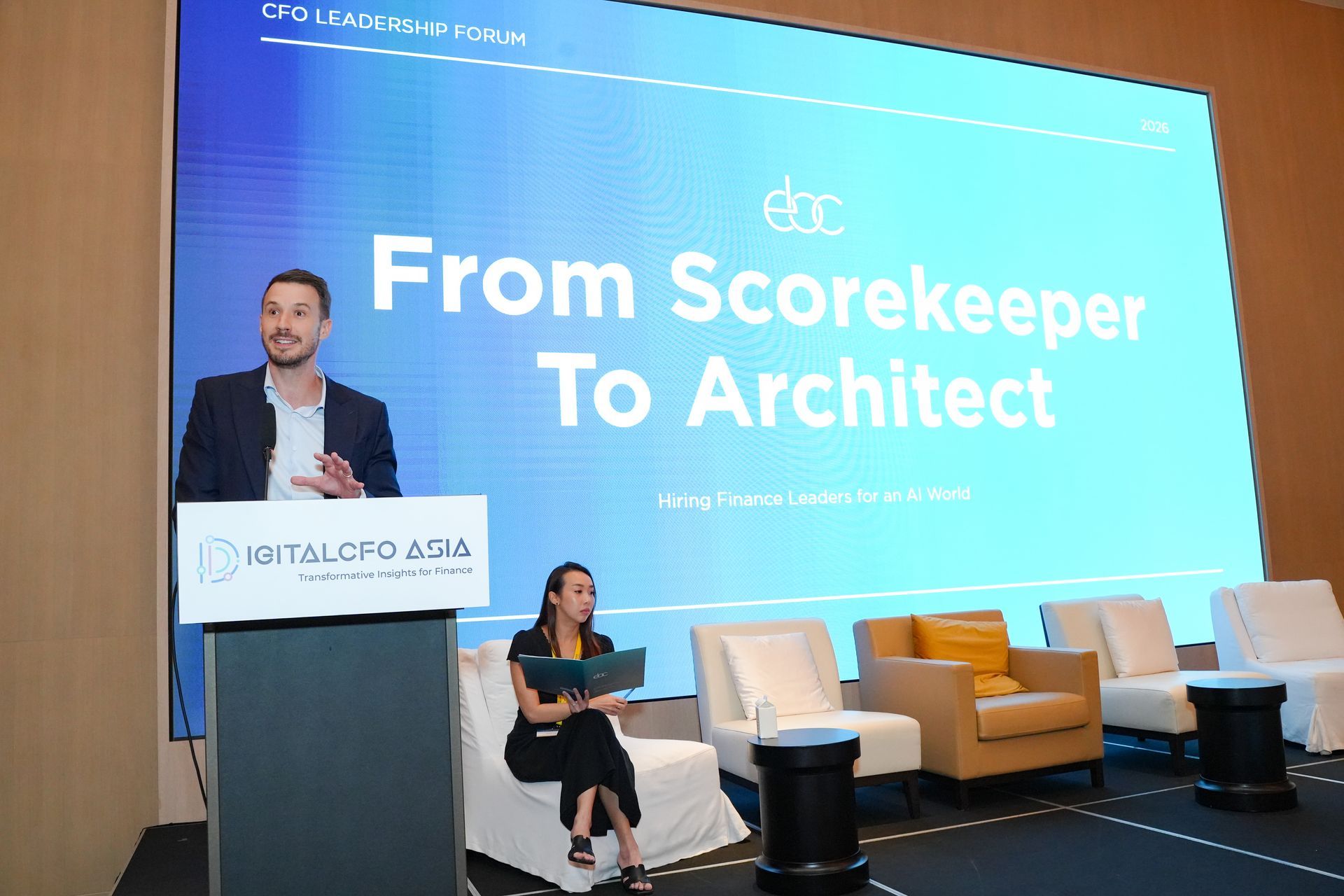
Last week, EBC's CEO Richard Bradshaw and Managing Director Shalynn Ler joined the CFO Leadership Forum 2026 to share what we're seeing on the ground in finance leadership hiring.


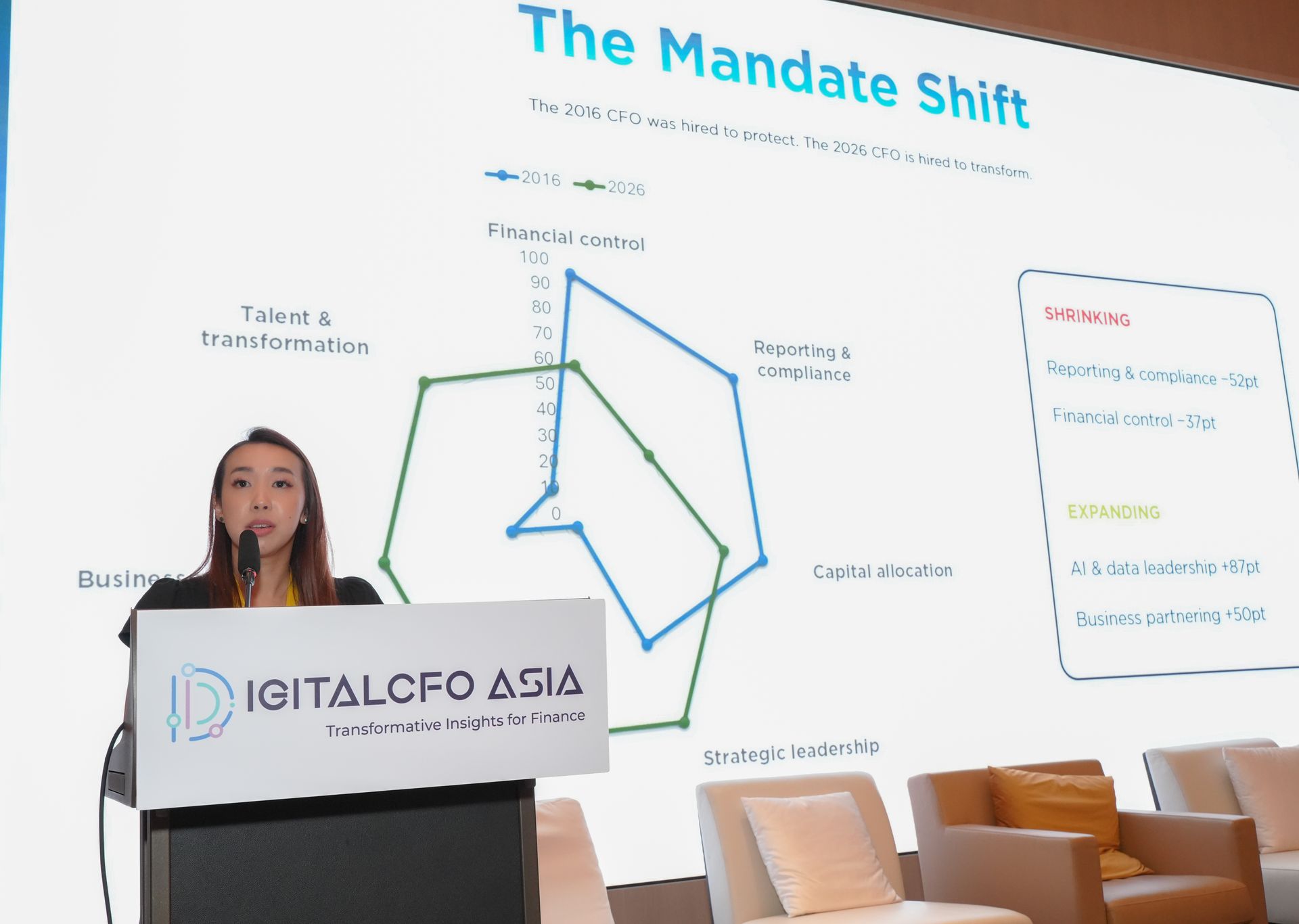
The conversation centred on one big shift: the CFO role has fundamentally changed. The 2026 CFO isn't hired to protect the business. They're hired to transform it.

The briefs landing on our desks reflect this. Skills like AI fluency, finance-to-data team translation, and change leadership are no longer nice-to-haves. They're the whole conversation. And yet most finance functions know AI matters but very few are operationally ready for it.


That gap, between awareness and execution, is exactly where the hiring challenge lives right now.


Richard and Shalynn also walked through the key dilemma facing finance leaders today: do you build capability from within, buy specialist talent from the market, or redesign your workflows first? There's no single right answer, but knowing which path fits your organisation is half the battle.

It was a great room, full of sharp questions and honest conversation about where the finance function is heading.


It was a great room, full of sharp questions and honest conversation about where the finance function is heading.


If you're thinking about your finance leadership team and want a perspective from the market, reach out to us at fs@ethosbc.com



By Shazamme System User August 18, 2026
Event Overview Trivia night is back! EBC's Contracting & Interim Solutions team is proud to host another round of trivia. Put your knowledge to the test across a mix of questions, from general knowledge to contracting insights, EBC fun facts, pop culture, and more. Whether you’re competitive by nature or just in it for the laughs, there’s something for everyone. Enjoy canapés, drinks, and the opportunity to connect with fellow professionals in a relaxed setting. Expect friendly competition, engaging conversations, and a fun way to unwind after work. Date: Thursday, 1st October 2026 Time: 6 :00 PM* – 8:30 PM Location: EBC Office, Twenty Anson, #19-01 *Registration starts at 6pm We look forward to seeing you there! The EBC Team
By Shazamme System User July 20, 2026
In an era of rapid economic shifts, technological disruption, and evolving workforce expectations, organisations that thrive are not simply those with the best products or the sharpest growth strategies. They are the ones that adapt the fastest in today's VUCA environment. At the centre of that adaptability is HR. No longer just a support function, HR plays a critical role in connecting people strategy with business strategy, helping organisations navigate change while building long-term resilience. Why HR Is Critical to Business Transformation The role of HR has evolved significantly. Today's HR leaders are architects of organisational resilience, influencing talent strategy, company culture, leadership development, and the successful execution of transformation initiatives. During periods of uncertainty, HR does not simply respond to change. It has the capacity to drive it. The Real Cost of Getting the People Side Wrong When organisations struggle, external pressures such as market conditions, technological disruption, or economic uncertainty are often blamed. While these factors are real, they rarely tell the full story. More often, the underlying challenges are internal: Leadership misalignment A culture resistant to change Employees who have not been equipped with the resources to adapt This is where HR creates value. By focusing on engagement, performance management, succession planning, organisational culture, and leadership development, HR leaders help organisations address issues before they become significant business challenges. 5 Ways HR Drives Business Transformation 1. Aligning Talent Strategy with Business Direction When workforce strategies fall out of sync with business objectives, performance slows and employee engagement declines. Effective HR leaders ensure talent strategies are developed alongside business strategy, creating the right roles, building future-ready capabilities, and designing development pathways that support where the organisation is heading rather than where it has been. 2. Building a Culture of Trust and Psychological Safety Innovation cannot thrive in environments where employees are afraid to speak up. Without trust, organisations become risk-averse, decision-making slows, and the ability to adapt gradually weakens. HR plays a key role in creating workplaces where openness, experimentation, and constructive challenge are encouraged and modelled by leadership. 3. Turning People Data into Strategic Decisions Many organisations collect workforce data, but far fewer use it effectively. HR teams that invest in predictive analytics, workforce intelligence, and AI-driven tools are better positioned to anticipate challenges before they become costly. Whether identifying flight risk among key talent, spotting skill gaps ahead of a strategic shift, or recognising declining engagement before productivity is affected, predictive HR enables more informed decision-making. Moving from reactive to predictive workforce planning has become one of the most valuable capabilities for modern HR teams, delivering measurable improvements in retention, performance, and long-term cost savings. 4. Making Learning a Competitive Advantage Many of today's business-critical roles did not exist just a few years ago, and the skills organisations need continue to evolve faster than traditional hiring cycles. HR's responsibility is to build scalable and cost-effective learning frameworks that develop talent from within. This includes identifying the right learning tools, encouraging continuous development, and redesigning knowledge sharing so learning becomes part of everyday work rather than an annual exercise. 5. Connecting People Across the Organisation Business transformation rarely fails because the strategy is wrong. More often, it loses momentum because the people responsible for delivering it are not aligned. Different functions often operate with competing priorities, while leaders may hold different assumptions about the direction of change. HR serves as the connective tissue across the organisation by facilitating cross-functional alignment, supporting consistent leadership communication, and creating a culture where collaboration becomes the default. In doing so, HR helps turn transformation from a leadership initiative into a shared organisational effort. Why Strategic HR Leadership Matters More Than Ever The organisations best positioned to navigate uncertainty are not necessarily the largest or the most well-resourced. They are the ones with the most adaptive cultures and the strongest people strategies. In today's rapidly changing business environment, strategic HR leadership is no longer a nice-to-have. It is a competitive necessity. If your organisation is navigating transformation and you'd like to discuss how the right talent can support your business goals, or if you have upcoming or urgent hiring needs, feel free to connect with Jillian Yip at jillian.yip@ethosbc.com . If you would like to discuss current market trends and reports, please reach out to us at marketing@ethosbc.com .
Hand using a tablet with glowing growth chart bars and an upward trend line overlay
By Shazamme System User June 11, 2026
Access the 2026 report on banking & fintech trends. Download now for insights that enhance recruitment decisions.
Show More

Share this article